Pocky Premium: APAC Packaging Visual Production
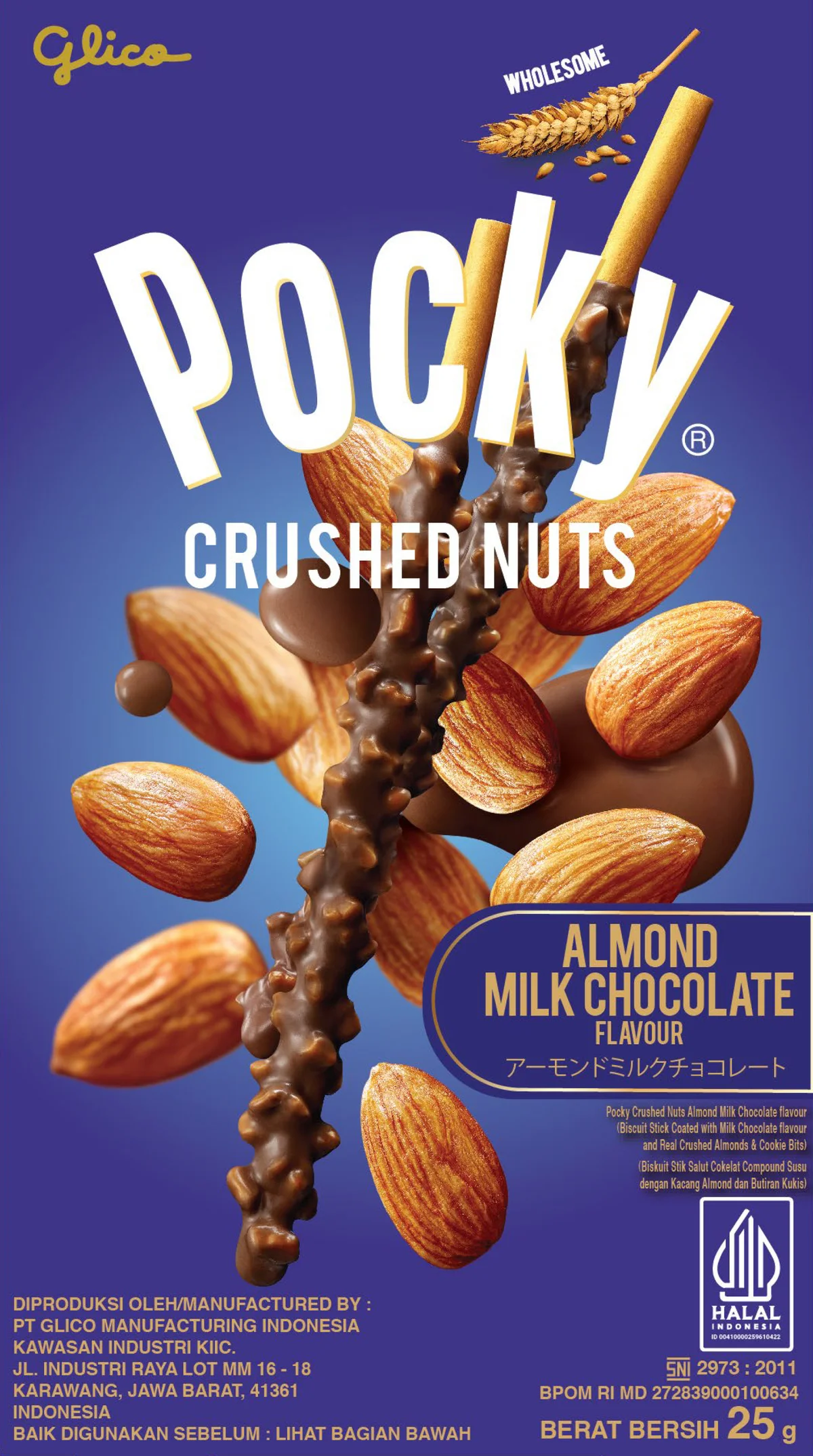
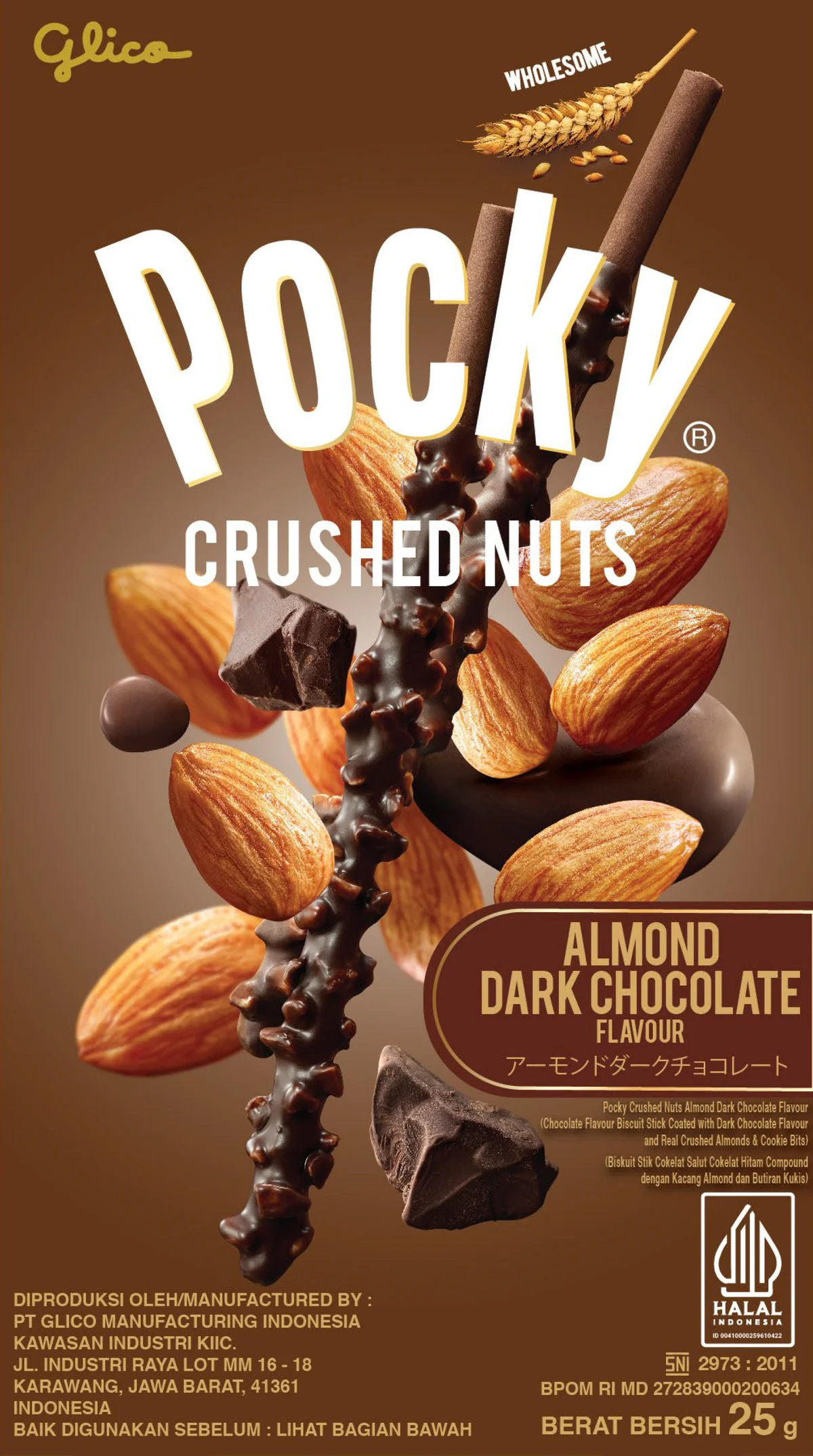
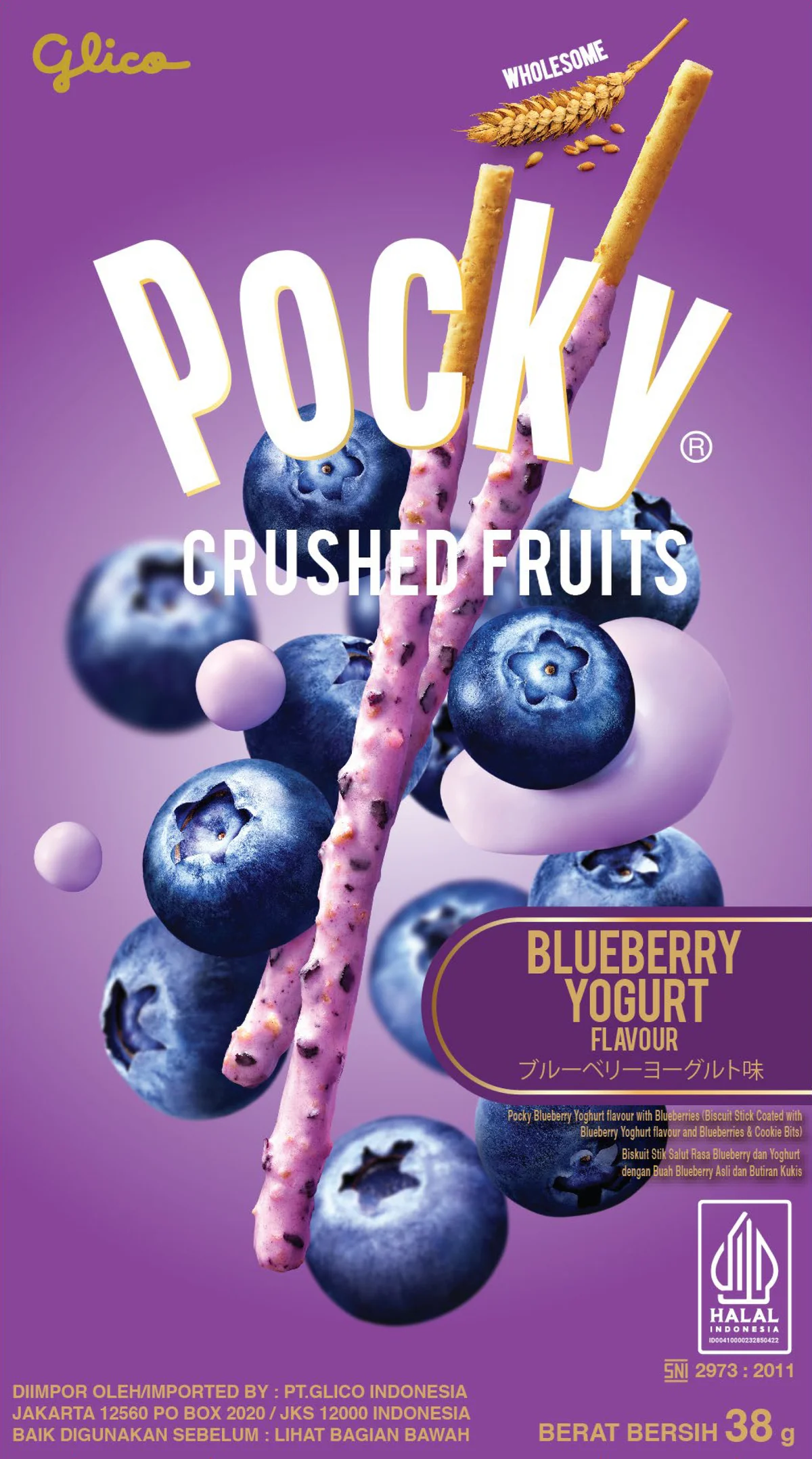
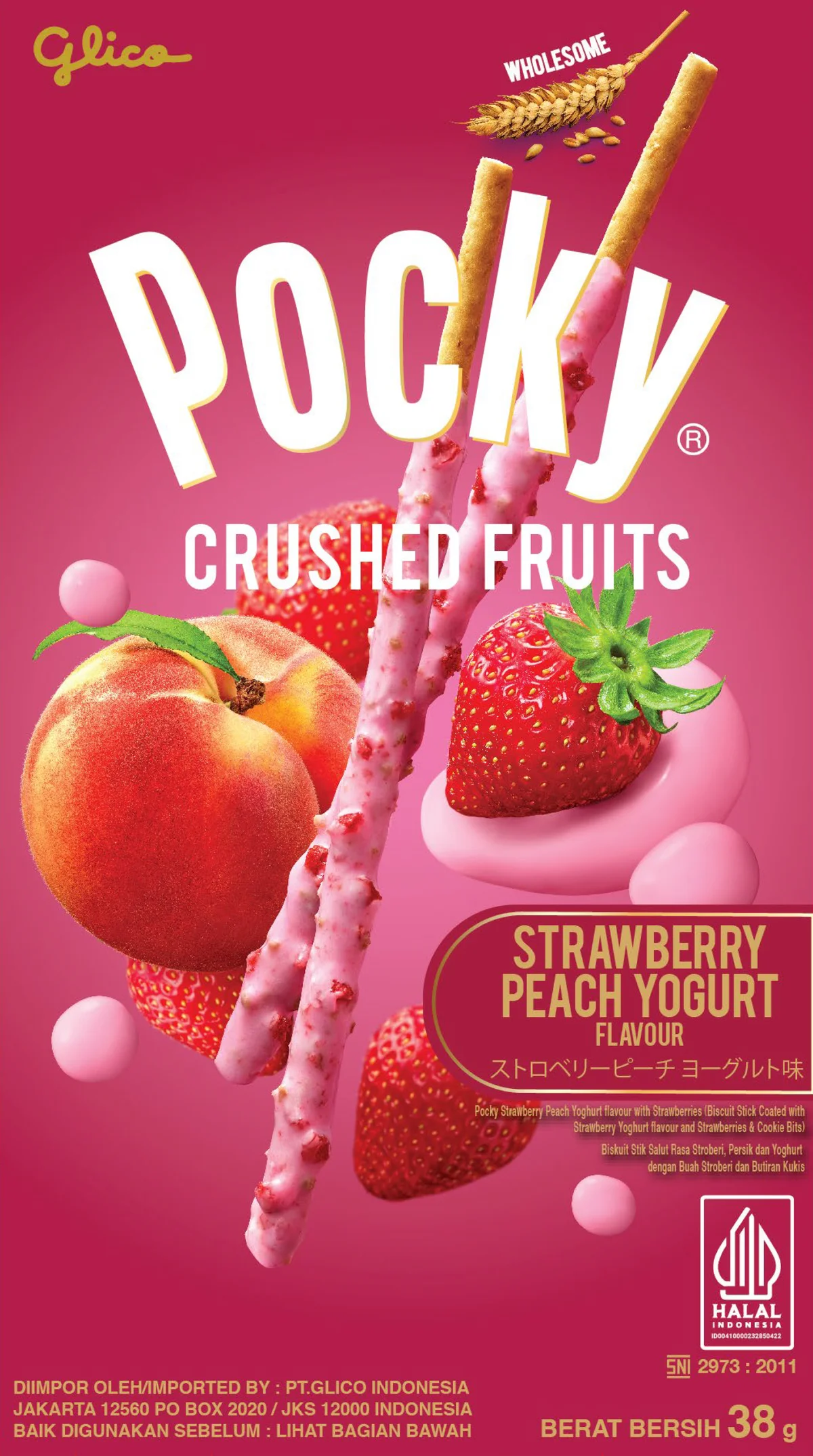
Packaging photography has a cruelty to it that people underestimate. There's no room to hide. Every almond, every chocolate drip, every glaze on a biscuit stick will sit on a shelf for months, scrutinized under supermarket lighting by someone deciding what snack to buy. For Pocky's APAC packaging visuals, that pressure sat with me for every layout.
The brief was built around four sensations the client wanted the packaging to deliver: premium, dimensional, clarity, tempting. Easy to write on a slide, much harder to translate into light hitting a chocolate-coated stick. We needed the product to look three-dimensional, almost sculptural, with enough shadow and highlight to convince someone standing in an aisle that they could taste it before opening the box.
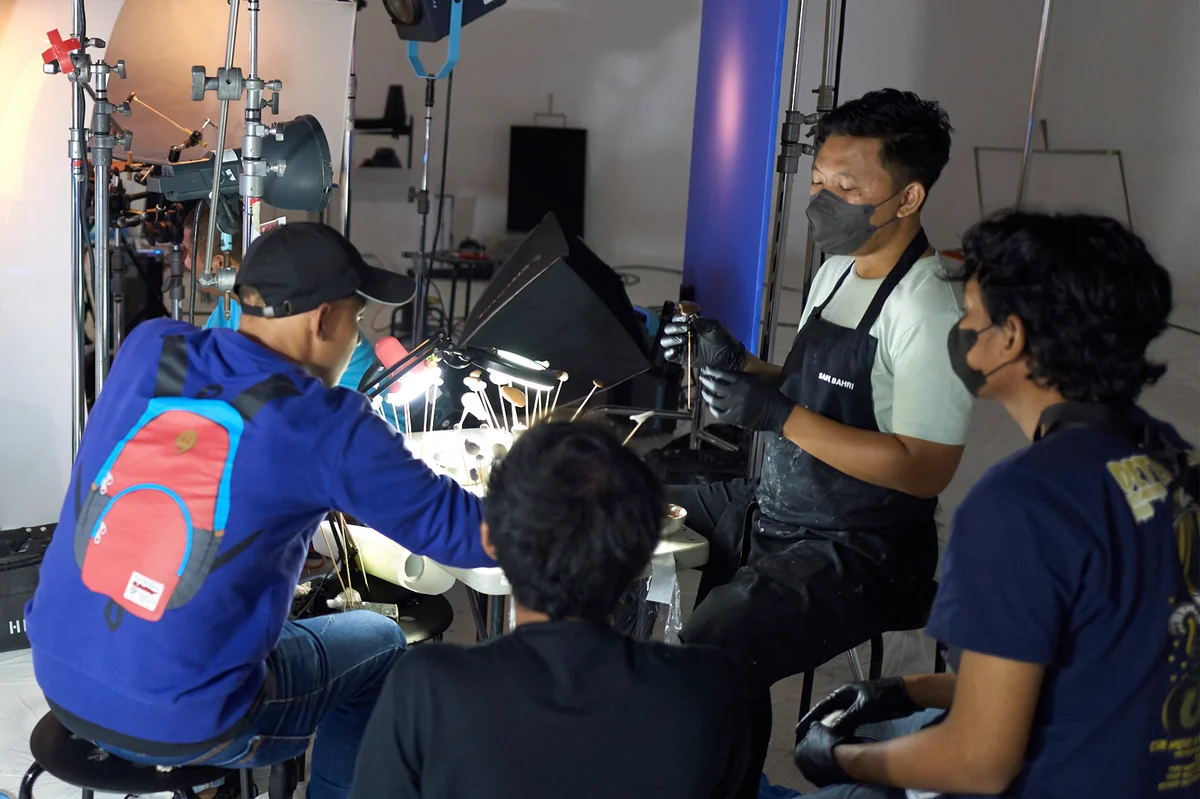
Before touching a camera, we studied. Real product samples came in from the factory, and I laid them next to reference packs from Japan and other regions, comparing the crush of almond crumbles, the thickness of glaze, the exact way pink strawberry coating clung to a biscuit stick. Some elements existed as physical benchmarks, others existed only as ideas we had to sculpt ourselves. That comparison stage mattered as much as anything I did behind the lens. It told me what "correct" looked like before I ever tried to light it.
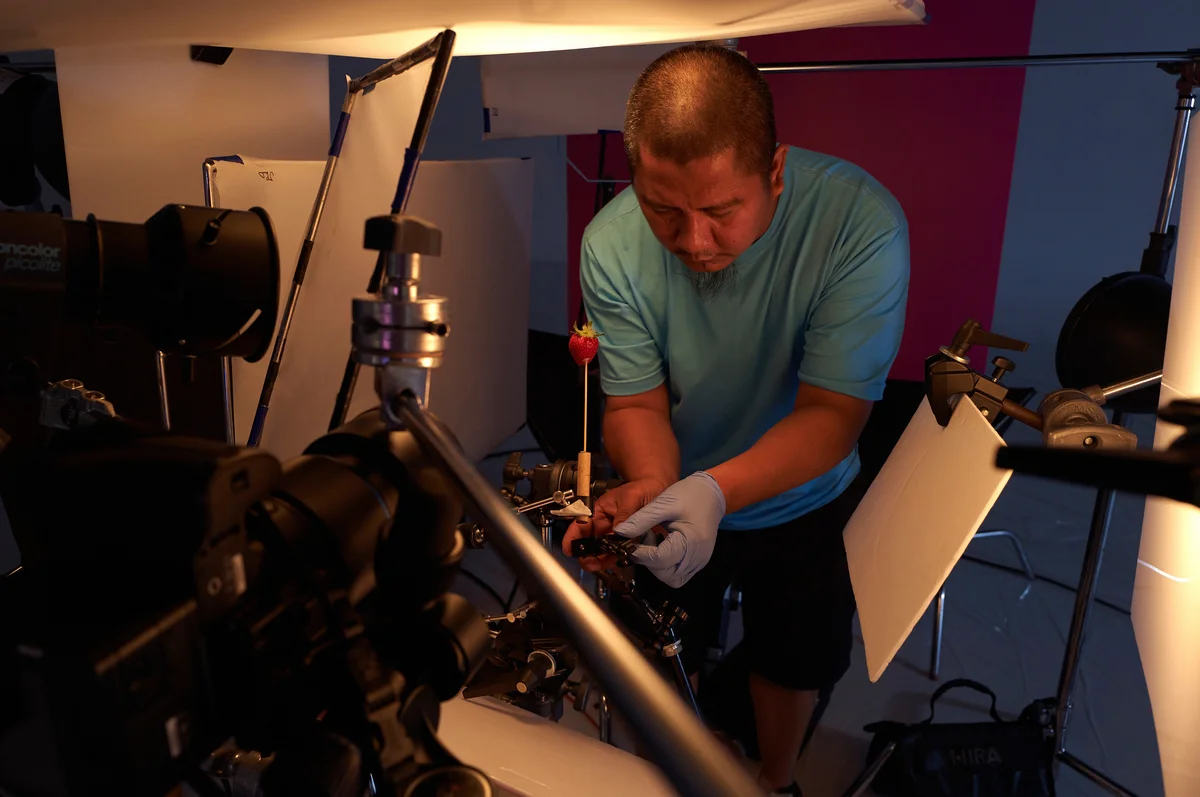
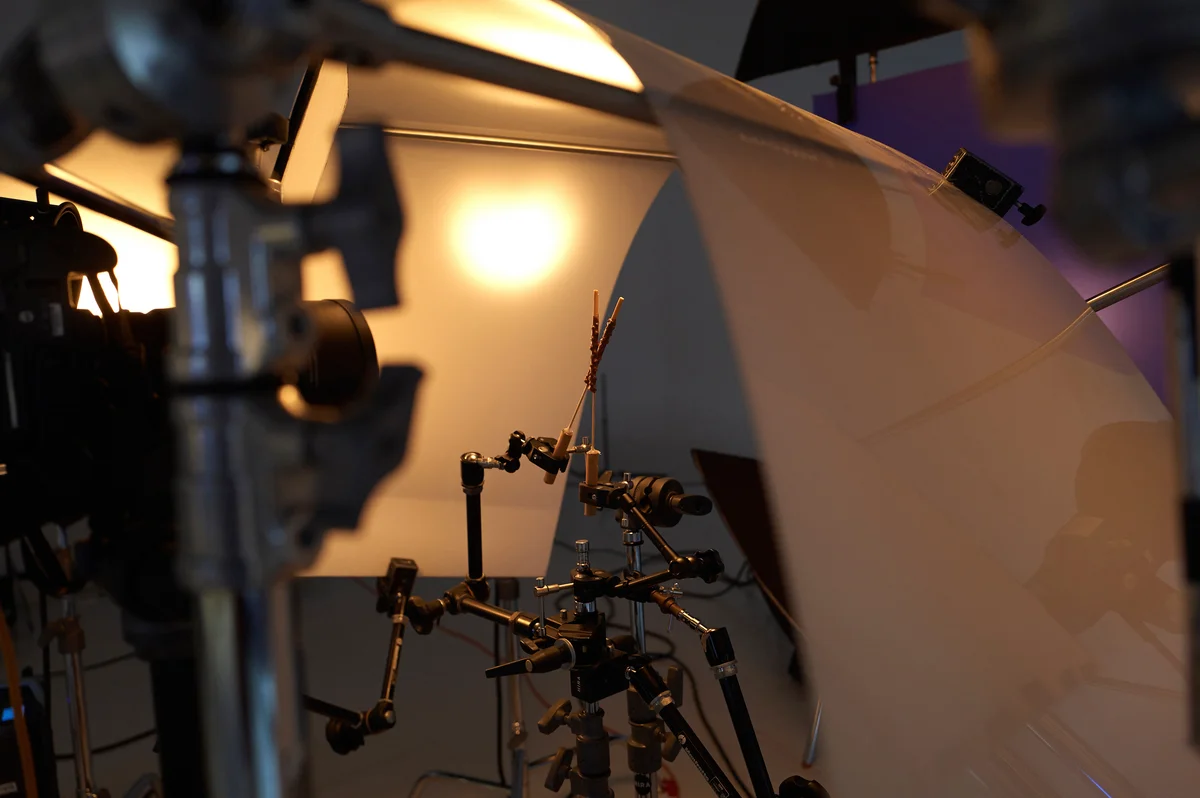
The shoot itself was an exercise in restraint. Early attempts to compose everything in front of the camera at once, the sticks, the almonds, the fruit, all together in a single frame, kept breaking down. Scale never matched what the layout demanded. So we changed approach entirely: shoot every element on its own, under its own controlled light and background, then rebuild the composition with intention afterward. It sounds like more work, and it was, but it gave us control over every millimeter of the final image. A stick photographed alone against a lavender backdrop. An almond lit until its texture felt tactile. A peach caught at the angle that made its blush look sun warmed rather than painted on.
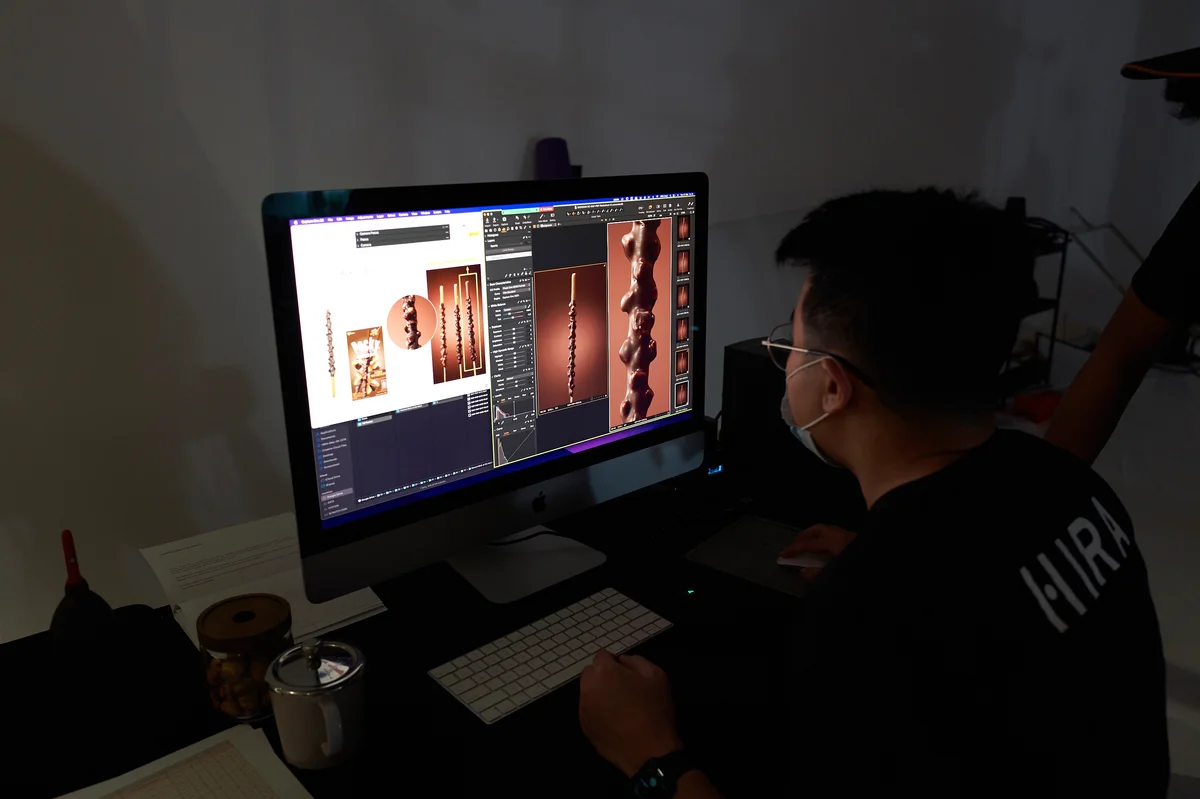
What people don't see in the final packaging is how much of that image was already there in camera. Almost nothing was invented later. The dimension, the shadow play, the sense of weight in a chocolate-dipped stick, all of it came from lighting decisions made on set, not corrections made after. Post-production existed to assemble and refine, not to manufacture realism that wasn't captured to begin with.
There's a particular satisfaction in still life work like this. No talent to direct, no set to dress beyond a sheet of seamless paper, just an object and the patience to make it convincing. By the time we finished, four layouts stood ready for markets across the region, each one built almond by almond, stick by stick, until they looked less like props and more like something worth reaching for.
Adhitya Himawan
Co-founder and photographer of HIRA Imaji, Jakarta.