Promag: Ramadan Campaign 2025
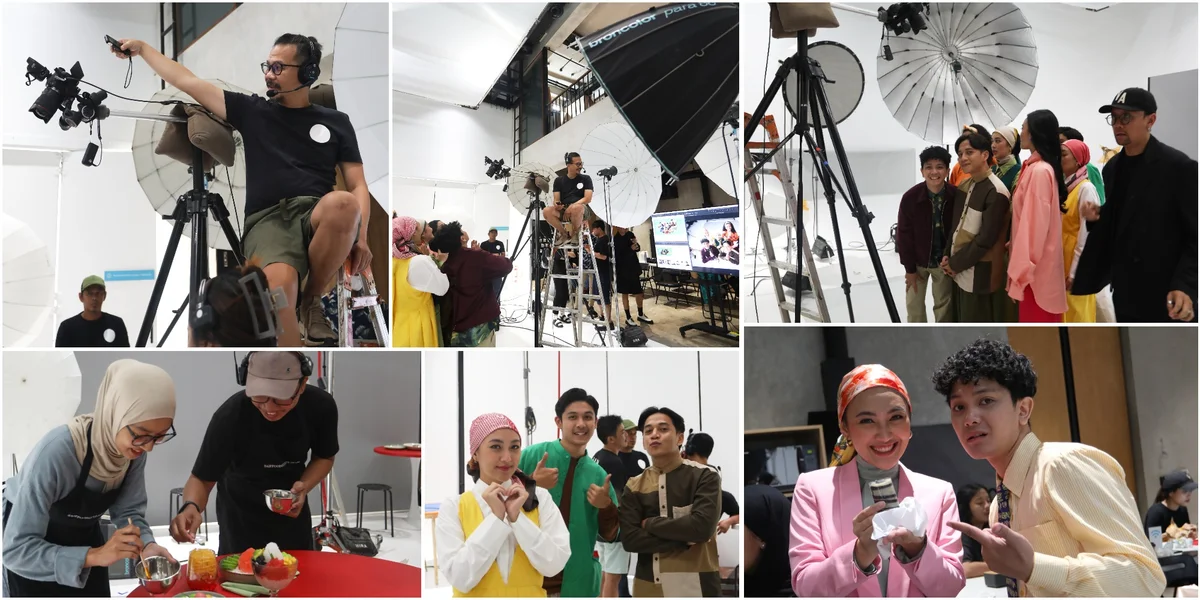
Nobody wants to talk about maag pain during Ramadan. It's the least glamorous part of the fasting month, and Promag's brief for this year asked us to make that discomfort visible without making it heavy. The audience skews young, so the whole visual language needed to feel closer to a lifestyle campaign than a pharmaceutical one, vibrant, slightly chaotic, built for a generation that documents everything, including the moment their stomach betrays them mid-hangout.
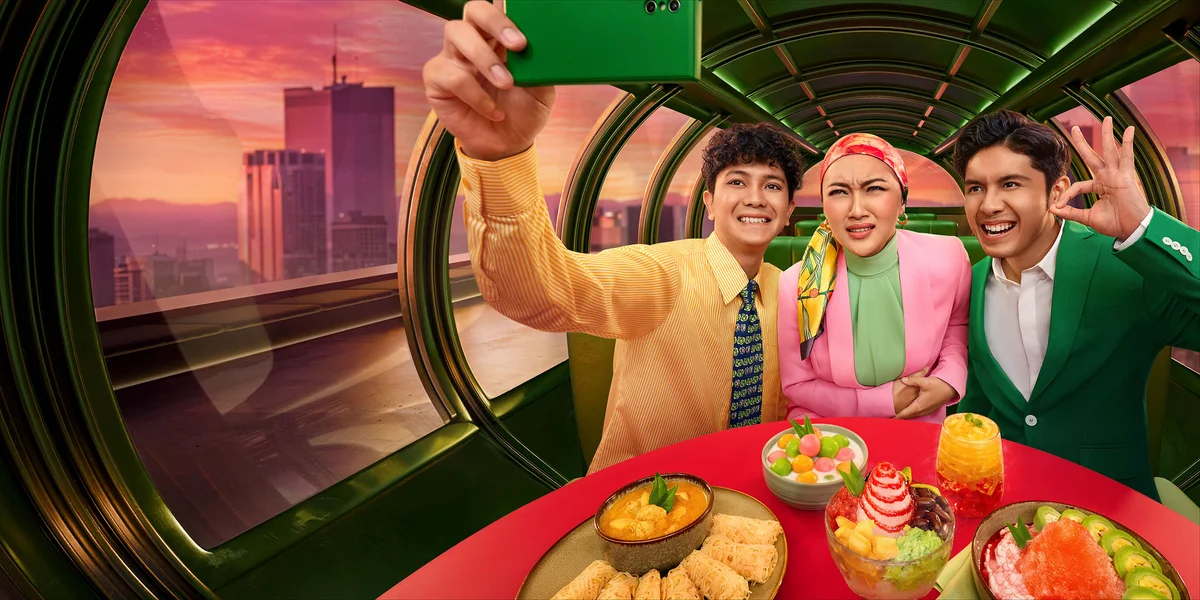
The first key visual leans directly into that instinct, three friends crammed into a selfie at buka bersama, one visibly wincing through the shot, hand pressed to her middle, still smiling for the camera because that's what you do. The comedy and relatability both live in that gap, pain performed as normalcy because stopping to actually deal with it feels like the bigger inconvenience. Getting that specific, very Gen Z reflex right, discomfort masked by a phone screen, took casting talent who understood the joke wasn't the pain itself but the reflex to keep smiling through it.
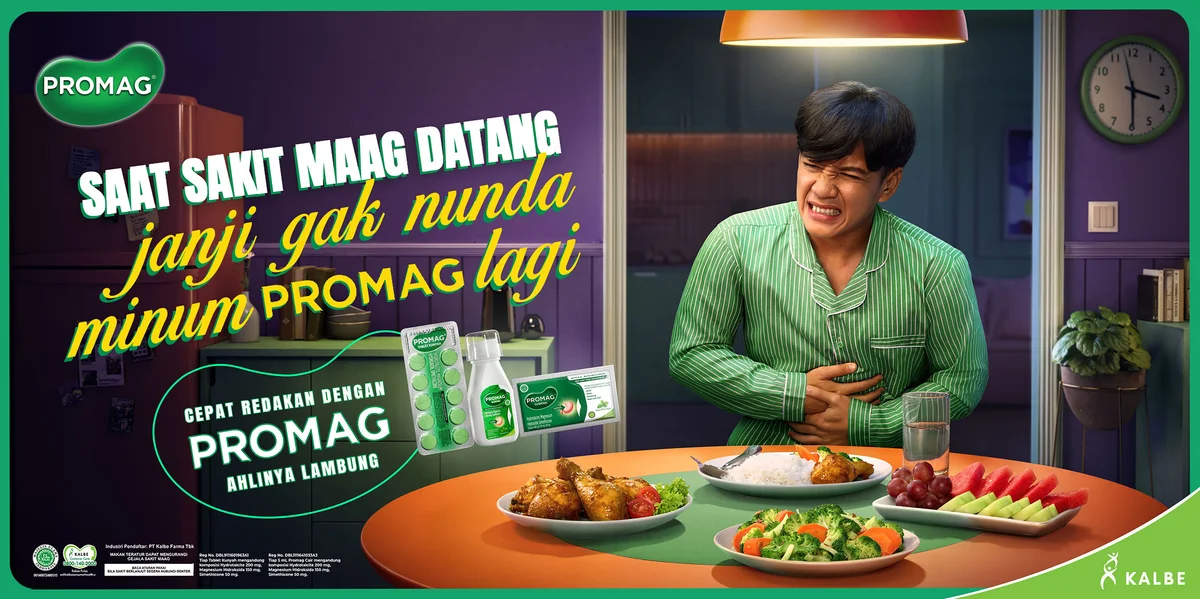
The second visual pulled back entirely, a single guy alone at the sahur table, food barely touched, stomach pain written plainly across his face with nobody around to perform for. Where the first key visual is loud and social, this one needed quiet honesty, the private, unglamorous side of maag that happens at an hour when most of your friends are still asleep and you're the only one dealing with it. That contrast between the two, crowded and public versus solitary and unfiltered, gave the campaign its emotional range without needing a third scenario to carry more weight than it could hold.
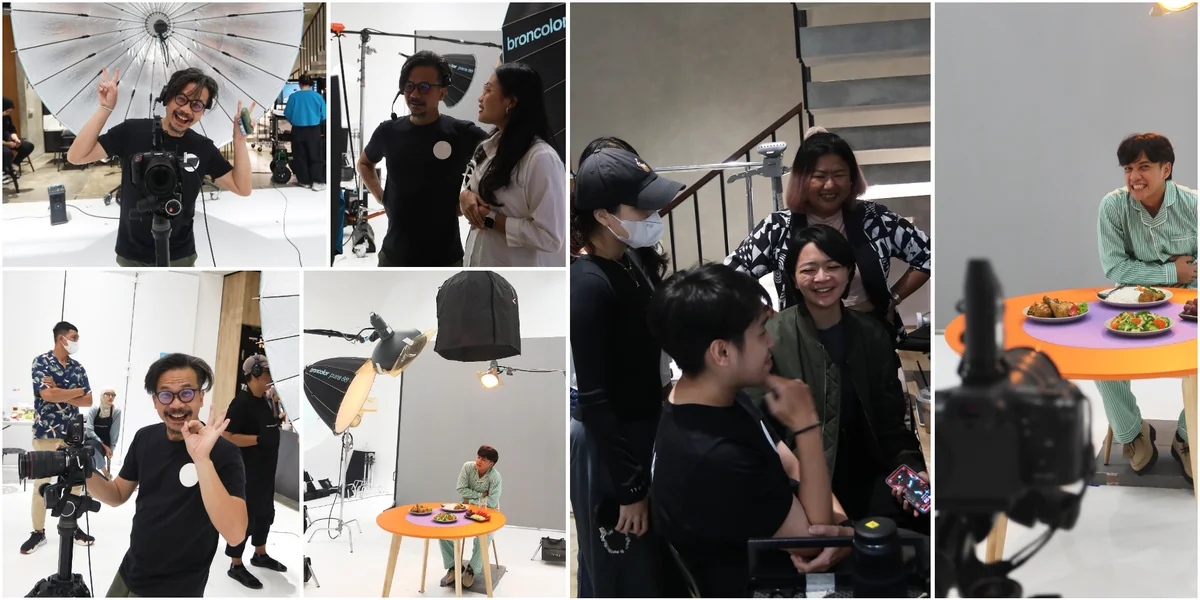
Visually we chased contrast and vibrancy throughout, referencing the kind of saturated, slightly surreal styling you see in youth-facing food and fashion campaigns, sharp lighting, real dimensional depth, nothing flat or clinical about it. Wide lenses did a lot of the heavy lifting here too, introducing just enough distortion to make each frame feel kinetic, like it was grabbed mid-moment rather than staged. Talent positioning and gesture were tuned specifically to exploit that distortion, leaning into camera, reaching a hand toward the lens, the kind of exaggerated proximity that reads as spontaneous energy rather than a technical trick.
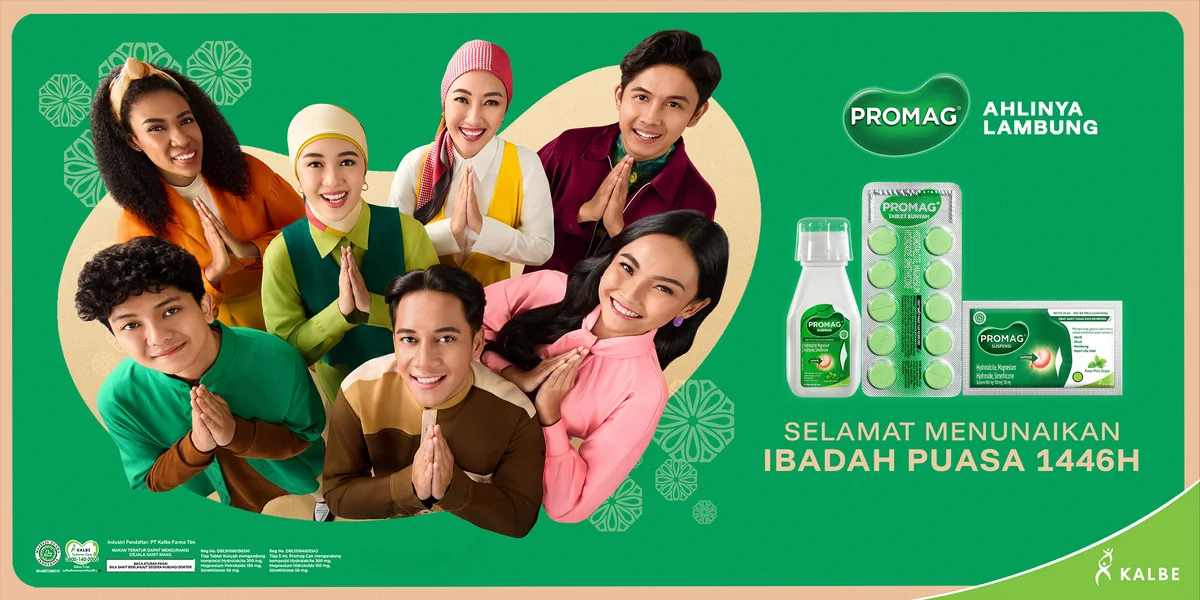
The greetings visual closed the campaign out on a different register entirely, a full ensemble cast dressed for Idul Fitri, hands together in a moment of collective gratitude. After two key visuals built on individual discomfort, this one needed warmth and unity instead, the whole community standing together rather than a single person managing pain alone. It's a deliberate tonal shift, and getting a group that size to hold genuine, synchronized warmth in a single frame required a very different kind of direction from the loose, kinetic energy of the first two visuals.
What ties all three together isn't the product shots or the graphic overlays, it's a consistent refusal to make maag pain feel like a medical condition rather than a very normal, very relatable Ramadan inconvenience. That's a tonal needle worth threading carefully, and it shaped nearly every choice on set, from casting through to how tightly we let the camera sit in someone's space.
Indra Dipta
Photographer of HIRA Imaji, Jakarta.