Teh Botol Sosro Ramadan Campaign "Memberikan Kebahagiaan adalah Kebahagiaan"
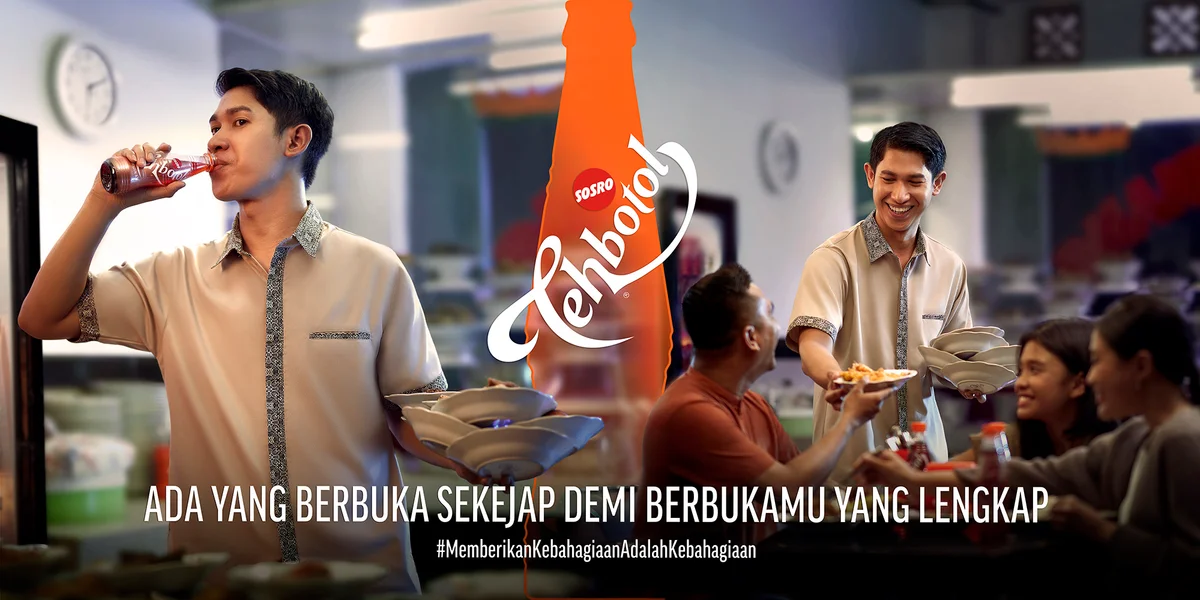
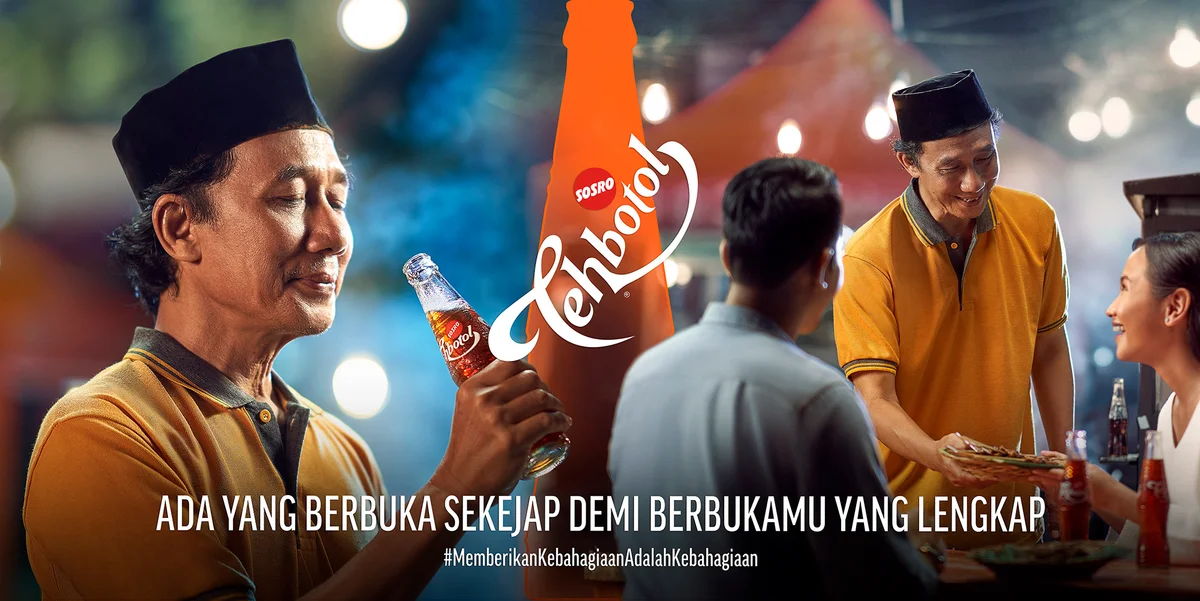
Every Ramadan campaign wants to talk about kebahagiaan, happiness, but most point the camera at the people receiving it. This one asked a different question. Who's actually behind the happiness. Who's on their feet, arms full, sweat on their brow, making sure everyone else's break-fast goes smoothly while their own moment waits.
That's the whole premise behind this campaign, and it shaped every decision on set. The unsung hero framing meant our talent couldn't look burdened or tired in any way that read as complaint. The restaurant worker, styled as a karyawan rumah makan Padang, needed to carry a stack of dishes piled high on both hands, the actual physical weight of the job, while still wearing a smile that felt genuine rather than performed. Same with the sate vendor, caught mid-motion wiping sweat from his brow with one hand while the other holds a bottle of Teh Botol Sosro, a small pause of relief built right into the gesture. Neither of them needed to look exhausted. They needed to look like people who found happiness in the middle of hard work, and that's a much harder expression to direct than either extreme.
Lighting was where the drama lived. We built around a single hard source pointed at the main talent, deliberately harsh rather than soft, because the goal wasn't a flattering glow, it was atmosphere. Think of the way a single overhead bulb cuts through a crowded warung at night, or how a satay cart's open flame throws light unevenly across a vendor's face while everything around him stays dim. That kind of lighting tells its own story before the talent even does anything. It says long hours, real work, a specific hour of the night when most people are heading home and a few are still going.
The composition leaned on separation, a technique where the subject stands distinct from a busy, detailed background without ever looking disconnected from it. Around the restaurant worker, the frame stayed full of motion, other diners, other staff, the general churn of a rumah makan Padang during Ramadan's dinner rush. Around the sate vendor, the same idea played out through smoke, flame, and the blur of a customer sharing the frame with visible warmth between them. In both cases the goal was the same, let the environment stay alive and specific, but make sure the eye lands on our hero first, held there by expression and by light before anything else in the frame competes for it.
We shot medium full, head to just above the knee, close enough to read every detail of effort in a raised hand or a furrowed brow, wide enough to keep the environment doing its job around them. It's a framing that refuses to let the story become abstract. These are specific people, in a specific kitchen, on a specific corner, and the product sits inside that reality rather than announcing itself over it.
What stayed with me after this shoot wasn't the lighting setup or the composition notes, useful as they were. It was how easily the idea of an unsung hero can tip into cliché, and how much the whole campaign depended on two people on set finding real warmth in a moment of genuine service. You can build every technical element around a concept like that. But the happiness in the frame either exists or it doesn't, and thankfully, both of them had it.
Indra Dipta
Photographer of HIRA Imaji, Jakarta.